Invisalign Attachments, SmartTrack Material, and Why 22 Hours Is Non-Negotiable
Learn how Invisalign attachments, SmartTrack material, and the 22-hour wear rule create your best smile. Schedule your Invisalign consultation today!
Read More


Restorative Dentistry
Bridges and dentures each solve tooth loss differently, and the "better" option depends heavily on your specific bone health, neighboring teeth, and how many teeth are missing. Some patients are poor bridge candidates for reasons their dentist may not fully explain upfront. This article breaks down the clinical nuances that actually drive that decision.
This surprises most patients: having perfectly healthy neighboring teeth can actually argue against a bridge. For Woodland Hills patients, preserving natural enamel is a top priority.
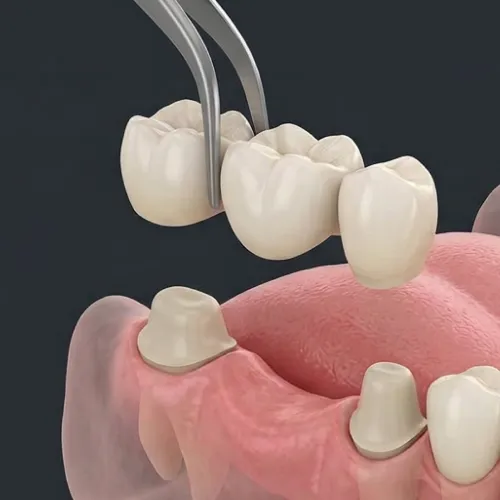
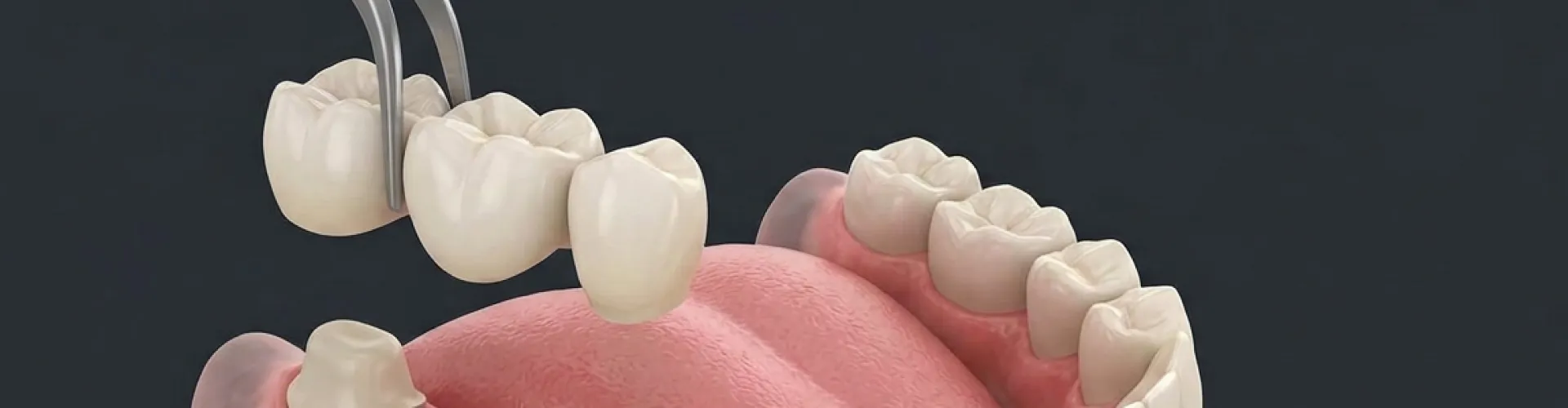
A traditional bridge works by grinding down the adjacent teeth on either side of the gap, capping them with dental crowns, and suspending a false tooth between them. According to Healthline, bridges don't require surgery and typically need only two dental visits. That sounds appealing. But here's the clinical reality that rarely makes it into consumer articles.
If those neighboring teeth are "virgin" — no fillings, no decay, structurally sound — permanently removing their enamel is an irreversible biological trade-off. Enamel doesn't grow back. You're sacrificing healthy tooth structure to anchor a restoration that will likely need replacing within 10–15 years. Over a lifetime, those crowned teeth become more vulnerable to decay, nerve damage, and eventual failure themselves.
An implant or a removable partial denture leaves those virgin teeth completely untouched. For younger patients especially, preserving intact tooth structure over decades is often the smarter long-term choice — even if the bridge seems like the simpler solution today.
The takeaway: if your dentist recommends against a bridge and your neighboring teeth are healthy, that recommendation is protecting you, not upselling you.
Bridges look natural immediately after placement. What patients aren't told is that the appearance has a biological expiration date.
A bridge replaces the visible tooth but not the root. Without a root stimulating the jawbone beneath the pontic (the artificial tooth), the bone gradually resorbs — it shrinks away. Over several years, a visible gap opens between the bottom of the bridge and the gumline. Clinically, this is called a "black triangle." Food traps in it. Air can whistle through it when you speak. For patients with a high smile line — meaning their gums show prominently when they smile — this aesthetic shift becomes very noticeable.
WebMD notes that removable partial dentures include pink acrylic material designed to mimic lost gum tissue. For patients who have already experienced significant bone or gum loss, a well-fitted partial denture can actually produce a more natural long-term appearance than a bridge — because the pink acrylic compensates for what's missing at the ridge level.
Dental implants address this differently. A Healthline overview of implant benefits explains that implants help preserve jawbone by mimicking a natural root and maintaining the stimulus that prevents resorption. That's why implants tend to retain their natural appearance longer than bridges over a 10–15 year horizon.
If bone preservation and long-term aesthetics matter to you, those factors should weigh heavily in your decision.
Patients often ask for a bridge to replace two, three, or four consecutive missing teeth. Most are told "it depends on the gap." What they're rarely told is why — and the physics behind it are straightforward.
Every tooth has a root with a specific surface area anchoring it to the jaw. When you build a bridge, the anchor teeth (abutments) must have enough combined root surface area to support the load of the teeth being replaced. This principle — known clinically as Ante's Law — means that if you're replacing three teeth but only have two anchors with modest roots, the bridge will function like a crowbar. Chewing forces concentrate at the anchor points, eventually stressing those teeth beyond what they can sustain.
Research published in PMC confirms that conventional fixed partial dentures show strong survival rates when properly selected cases are treated — but case selection is everything. Longer spans with insufficient anchor root support are a primary driver of prosthetic failure.
For patients with large gaps, dentures distribute load across the gum tissue and remaining teeth more broadly. An implant-supported bridge uses implants as anchors rather than natural teeth, sidestepping the root surface area problem entirely. The American Dental Association's MouthHealthy resource notes that bridge success depends fundamentally on the strength of the supporting foundation — which is exactly why your dentist evaluates root health and gap size together before recommending any option.
Neither option is universally better. They solve different problems for different patients.
Bridges work well when: you're missing one or two teeth, the neighboring teeth already have crowns or significant restorations, the gap is short, and your bone levels are healthy. Healthline's comparison of dentures and implants notes that dentures fit even with low bone density — making them accessible when implants or bridges aren't viable.
Dentures (full or partial) work well when: multiple teeth are missing across different areas, bone loss has already occurred, neighboring teeth are healthy and should stay untouched, or budget and health factors make surgery inadvisable. Patients dealing with gum disease may also find that addressing gum health first is a prerequisite before any restoration can be placed.
Implants remain the gold standard for single-tooth replacement when bone volume supports them — preserving bone, protecting adjacent teeth, and delivering the most durable long-term outcome. But not every patient is a surgical candidate, and not every gap requires the most complex solution.
The right answer starts with a thorough clinical evaluation — not a preference for one category of restoration over another.
If you're weighing a bridge, a partial denture, or an implant, the decision deserves more than a generic pros-and-cons list. At Complete Health Dentistry in Woodland Hills, we evaluate your bone health, neighboring teeth, and long-term goals before recommending any restoration. As a cosmetic dentist in Woodland Hills, we serve patients across the West San Fernando Valley — including Woodland Hills and Calabasas — and we're here to help you make a confident, informed decision. Contact us to schedule a consultation.
This article is intended for informational purposes only and does not constitute dental or medical advice. Individual treatment decisions should be made in consultation with a licensed dental professional.