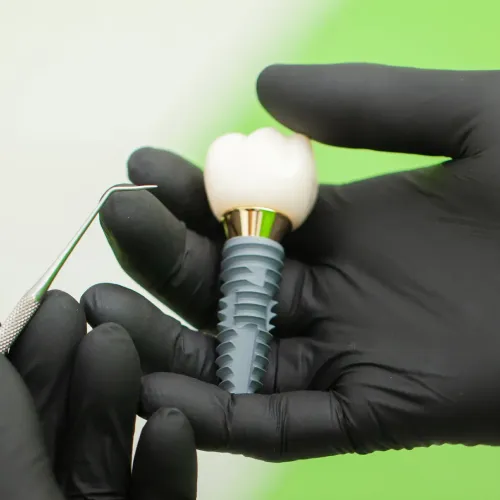
Dental Implants vs. Dentures: Which Actually Looks and Functions Better?
Comparing dental implants vs dentures? Discover which option looks, feels, and functions best for your smile and budget. Schedule your consultation today!
Read More



Restorative Dentistry
Dental implants and dentures both replace missing teeth, but they differ dramatically in how they feel, how they age, and what they do to your face over time. If you're weighing your options in Woodland Hills or Calabasas, understanding the full picture — beyond just upfront differences — helps you make a confident decision. Our cosmetic dentist in Woodland Hills can help guide you through every option available.
Most comparisons jump straight to aesthetics — porcelain versus acrylic, shade-matching, smile appearance. But the more consequential story happens beneath the gumline.
When a tooth root is lost, your jawbone no longer receives the mechanical stimulation it needs to maintain density. Your body interprets that as a signal to resorb the bone. Over months and years, the ridge shrinks. The lower third of your face — lips, chin, jaw — gradually loses its structural support.
Traditional removable dentures sit on top of this shrinking ridge. They don't stop the process. Over a 5–10 year horizon, patients often develop what clinicians describe as a "collapsed" facial profile: sunken lips, deepened perioral wrinkles, and a shortened vertical dimension of occlusion. The denture that fit well at year one rarely fits well at year five — and the face that looked natural at fitting looks progressively older as bone loss continues.
According to Healthline, dental implants help preserve jawbone by providing the stimulation a natural root once provided — maintaining the structural integrity of the jaw and preventing the facial changes that follow bone loss.
Implants integrate directly into bone. That osseointegration doesn't just anchor the crown — it signals the jaw to maintain itself. The result, over years, is a face that retains its natural architecture rather than slowly collapsing inward.
This is the difference that photographs and mirror checks don't reveal until it's already progressed.
Upper removable dentures cover the hard palate with an acrylic plate. That plate serves a structural purpose — it creates suction — but it also covers the taste and temperature receptors embedded in palatal tissue.
The practical effect: food tastes flatter. Temperature sensations are dulled. Patients often report that eating feels less satisfying, not because chewing is difficult, but because the sensory experience is muted.
Speech is affected in a parallel way. The hard palate plays a critical role in producing sibilant and fricative sounds — "S," "Th," "V," and "F" sounds that require precise tongue-to-palate contact. An acrylic plate changes that contact geometry. Most patients adapt over weeks to months, but the adjustment period is real, and some sounds never fully return to their pre-denture quality.
Implant-supported arches are designed with an open palate. The tongue contacts natural tissue. Taste and temperature receptors remain unobstructed. Speech mechanics are not disrupted by a foreign surface covering the roof of the mouth.
WebMD notes that snap-in dentures — which attach to implant posts — are less likely to become loose during speaking and offer improved stability over conventional false teeth dental dentures precisely because they don't rely on suction or adhesive.
For patients who speak professionally, socialize actively, or simply want food to taste the way it should, this distinction is worth weighing carefully.
Beyond facial structure and sensory experience, daily function separates these options in meaningful ways.
A Healthline overview of dentures vs. implants notes that both solutions help restore chewing ability, support facial muscles, improve speech, and increase confidence — but the mechanisms and durability differ significantly.
Traditional dentures are removable, require daily cleaning, and depend on adhesives or suction for stability. They work reasonably well for many patients, particularly those with low bone density who may not be candidates for surgery. But they shift. They can make certain foods difficult. And as the bone ridge resorbs, refitting becomes necessary. Patients experiencing discomfort or instability with existing dentures may also want to be evaluated for underlying gum disease gingivitis that could affect their candidacy for implants.
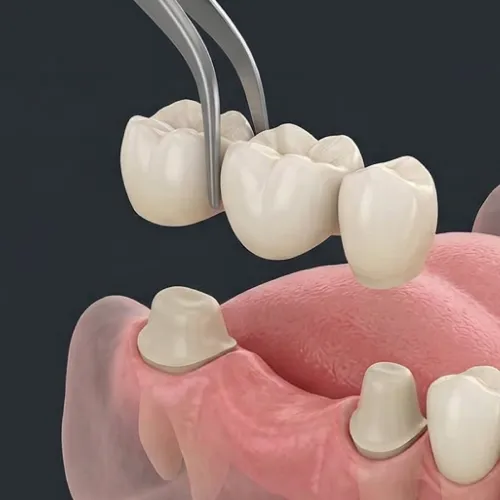
Dental implants behave more like natural teeth. Research published on NCBI cites implant success rates above 97% at 10 years, with additional benefits including reduced risk of decay in adjacent teeth and improved bone maintenance at the implant site. In some cases, a dental crown is used to cap a single implant post, restoring both function and appearance for individual missing teeth.
Snap-in dentures offer a middle path. They attach to two to six implant posts per jaw, providing significantly better stability than conventional dentures while remaining removable for cleaning. Healthline's overview of snap-in dentures highlights improved chewing ability, better fit, reduced gum friction, and a more natural appearance — along with the bone-preserving benefit of implant posts.
Not every patient is a candidate for implants. Adequate bone density is required, and patients who cannot undergo surgery may not qualify. A thorough clinical evaluation determines candidacy — including whether bone grafting might make implants accessible for someone initially told they weren't a candidate.
The honest answer to "are implants better?" depends on the patient. For most healthy adults with sufficient bone, implants provide superior long-term function, facial preservation, and sensory experience. For others, snap-in dentures or conventional dentures remain appropriate, effective solutions.
Choosing between implants, snap-in dentures, and conventional dentures is a clinical decision — not one a blog post can make for you. The right answer depends on your bone density, health history, functional goals, and timeline.
Complete Health Dentistry serves patients throughout Woodland Hills, Calabasas, and the West San Fernando Valley. Our team evaluates each patient individually to recommend tooth replacement that supports both your smile and your long-term oral health. We also recommend maintaining regular dental cleaning appointments to protect your overall oral health before and after any restorative procedure. Contact us to schedule a consultation.
Medical disclaimer: This article is intended for informational purposes only and does not constitute medical or dental advice. Always consult a licensed dental professional before making decisions about your oral health treatment.