What to Do for a Broken Tooth Before Seeing the Dentist
Have a broken or cracked tooth dental emergency? Learn what to do for a broken tooth before seeing the dentist and relieve pain fast. Call us today!
Read More


Emergency Dentistry
A broken tooth is a dental emergency — even when it doesn't hurt. What you do in the hours before your appointment can protect the nerve, prevent infection, and directly influence whether your tooth can be saved with a simpler treatment.
Before you reach for anything from the medicine cabinet, take a close look at the broken surface. For Woodland Hills-area patients, this 30-second self-check changes everything about how urgently you need to be seen.
According to WebMD, the treatment for a broken tooth depends entirely on how severely it is damaged. Here's how to read what you're seeing:
White or off-white surface, no sensitivity: Likely an enamel-only chip. Low urgency — still call your dentist, but this is typically a same-week situation.
Yellow layer visible, sharp sensitivity to air or cold: You're looking at exposed dentin. This is more serious. Bacteria are working inward through microscopic tubules.
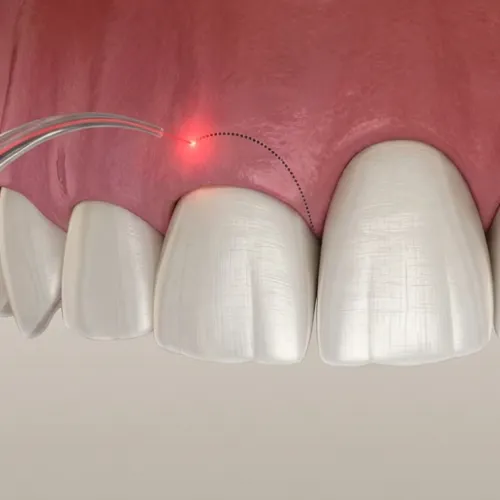
A pinpoint red or pink dot in the center of the break: This is exposed dental pulp — the living nerve tissue inside your tooth. This is a true dental emergency.
That pink dot matters more than most people realize. When pulp is exposed, bacteria have a direct path to the nerve. A small window exists — roughly 24 to 48 hours — during which a conservative treatment called direct pulp capping or vital pulp therapy may still be viable, potentially preserving the nerve without a full endodontic root canal. Once bacteria establish deeper infection, that option closes. Research published in StatPearls via NCBI confirms that fractures involving the pulp may lead to periapical lesions, and early treatment is directly tied to favorable outcomes.
If you see that pink dot, call for an emergency appointment today — not tomorrow.
Most people grab whatever's in the medicine cabinet. Some of those choices are fine. One common one can make things significantly worse.
Safe steps to take right now:
That last point deserves emphasis. A Healthline overview on chipped tooth care recommends dental wax to blunt jagged edges, and this is the right call. Orthodontic wax sits over the sharp edge without sealing the fracture site — it protects your soft tissue without trapping anything inside the tooth.
What to avoid: OTC temporary cement kits (Dentemp, Temparin)
These zinc oxide-based putties feel like a logical fix — seal the crack, stop the pain, buy time. The problem is that they do exactly that: they seal. If your fracture extends into dentin or deeper, packing a putty over an unsterilized break traps anaerobic bacteria inside the dentinal tubules. That environment accelerates pulp necrosis and can produce an acute periapical abscess within 48 to 72 hours — turning a manageable fracture into a more serious gum disease gingivitis infection. Relief wax blunts sharp edges without sealing in bacteria. That distinction matters.
The American Dental Association via MouthHealthy also advises against putting aspirin directly on gum tissue near a broken tooth, as it can burn the tissue and worsen the situation.
Eat soft foods, chew on the opposite side, and avoid cold beverages — exposed nerve tissue is highly reactive to temperature.
A tooth broken at or below the gumline is a different clinical situation entirely — and one that confuses a lot of patients. The root may be intact. The nerve may be intact. So why can't the dentist just cap it?
The answer involves something called the ferrule effect. For a crown to hold long-term, there needs to be at least 1.5 to 2mm of sound natural tooth structure above the bone to create a mechanical "collar" around the base of the crown. Without that ferrule, the crown has nothing to grip and will fail under normal biting forces.
Healthline's coverage of molar fractures at the gumline notes that whether a tooth can be saved depends on how deeply it is broken and how quickly treatment begins. When there isn't enough tooth above the bone, two surgical options may restore that margin before a crown is placed:
If neither approach yields adequate structure, tooth extraction followed by an implant or bridge becomes the path forward. This is why your dentist may take X-rays before giving you any answer about a gumline fracture — the decision is geometric, not arbitrary.
Once you're in the chair, treatment is matched to the severity of the fracture. WebMD's guide to repairing a chipped or broken tooth outlines the main approaches:
Dental bonding: For small enamel chips, especially on front teeth, composite resin is shaped and hardened directly onto the tooth in a single visit. No anesthetic is typically needed.
Dental crown: When a large portion of the tooth is gone or decay is involved, the remaining structure is shaped and covered with a crown — porcelain, ceramic, or metal depending on location and function.
Root canal + crown: If the pulp is exposed or infected, the nerve tissue is removed before the crown is placed. Timing matters here — the sooner the pulp is treated after exposure, the better the chance of a straightforward procedure.
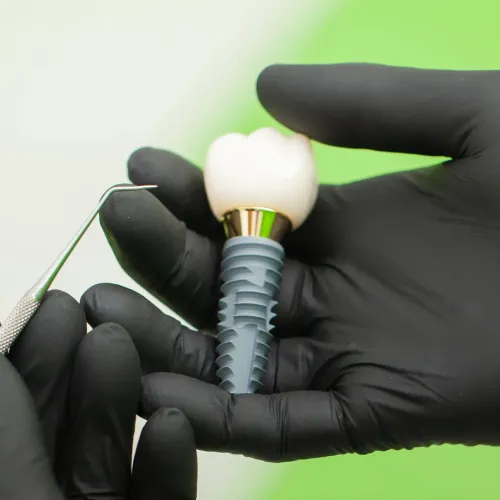
Extraction: Reserved for fractures that extend too deeply to restore, or when infection has progressed beyond treatment. In cases where a tooth cannot be saved, dental implants are often the most durable long-term replacement option.
The through-line across all of these: earlier treatment almost always means simpler treatment.
If you've broken a tooth — whether it's a small chip or something more serious — Complete Health Dentistry in Woodland Hills is here to help. We serve patients throughout the West San Fernando Valley, including Calabasas, and we keep time in our schedule for toothache emergency dentist appointments. Call us today so we can assess your tooth, explain your options, and get you out of pain as quickly as possible.
This article is for informational purposes only and does not constitute dental or medical advice. Always consult a licensed dental professional for diagnosis and treatment of any dental condition.