Invisalign Attachments, SmartTrack Material, and Why 22 Hours Is Non-Negotiable
Learn how Invisalign attachments, SmartTrack material, and the 22-hour wear rule create your best smile. Schedule your Invisalign consultation today!
Read More



Cosmetic Dentistry, Teeth Straightening
Invisalign attachments are small composite resin buttons bonded to your teeth to guide complex tooth movements, and they only work when paired with consistent aligner wear. The SmartTrack material behind each tray operates on a physics principle — not a preference — that makes 22 hours per day a biological threshold, not an arbitrary guideline.
Most patients assume skipping a few hours here and there just slows progress slightly. The reality is more nuanced — and it comes down to material science meeting biology.
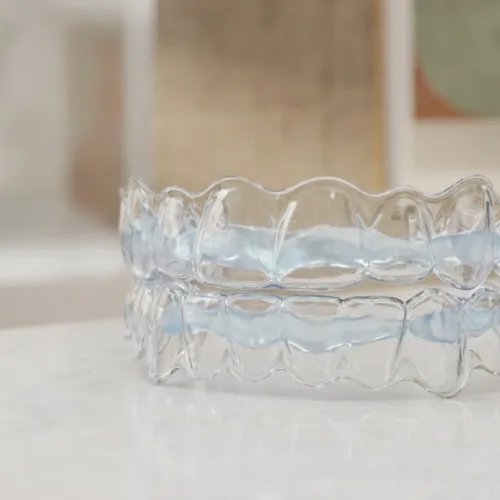
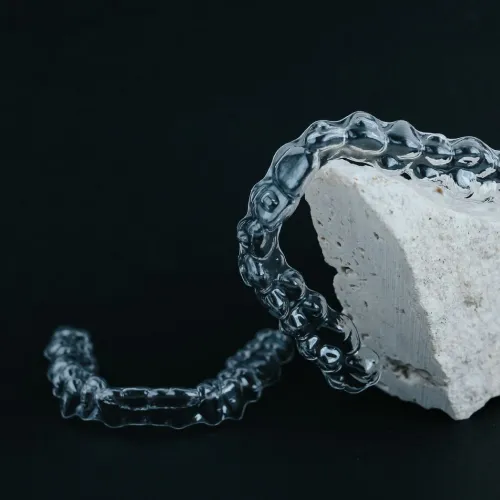
Invisalign trays are made from SmartTrack, a proprietary multi-layer polyurethane-copolyester material. According to Healthline, this flexible thermoplastic is specifically engineered to apply consistent, low-intensity force against your teeth throughout the day. That steady pressure is what triggers bone remodeling in the periodontal ligament (PDL) — the connective tissue anchoring each tooth to your jaw.
Here's where the biology matters. The PDL responds to sustained, gentle force by signaling bone cells to resorb on one side of the tooth and deposit new bone on the other. This remodeling cycle requires continuous mechanical input. When aligners are removed for more than 30–60 consecutive minutes, the PDL begins a natural "rebound" — a process where the elastic fibers in the ligament start pulling teeth back toward their previous position. SmartTrack's force delivery is calibrated for a 22-hour wear window specifically because that's the threshold that keeps remodeling activity ahead of rebound.
Dropping wear time to 14–18 hours doesn't simply slow progress linearly. It can allow rebound forces to partially undo the movement already achieved, meaning the next tray fits poorly — or not at all. WebMD notes that orthodontists recommend wearing aligners for 22 hours each day, removing them only for meals and brushing.
The practical takeaway: meals, brushing, and brief social moments are fine. Extended removal is not.
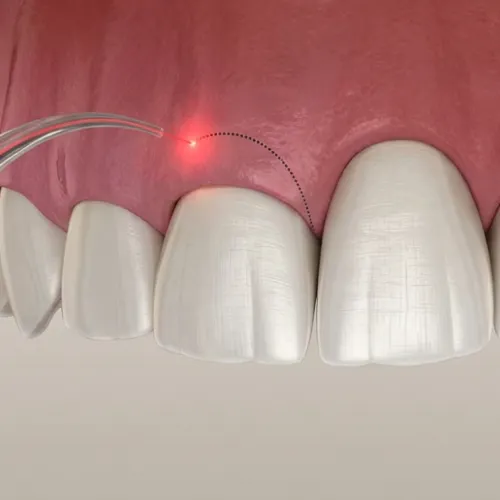
Attachments are small, tooth-colored bumps bonded directly to specific teeth before or during treatment. A Healthline overview of Invisalign attachments explains that they're made from composite resin — the same material used in tooth-colored fillings — and each one is shaped precisely to encourage a specific type of movement. Rotations, extrusions, and torque corrections often require attachments because the aligner alone cannot generate enough directional force.
Not everyone needs them. Whether attachments are part of your treatment depends entirely on the complexity of your tooth movements.
What competing sources rarely address is what happens when an attachment is intact but a small air gap develops between the tray and the tooth pocket. This is called a tracking discrepancy, and it's more common than most patients realize.
SmartTrack loses grip on optimized extrusion and rotation attachments when the aligner hasn't fully seated — usually because of inconsistent wear time or switching to a new tray too early. A gap of roughly 1mm can often be self-corrected using silicone chewies: small cylindrical foam devices you bite down on for 5–10 minutes per session, several times daily. The biting action helps press the aligner fully onto each attachment, restoring proper contact.
The clinical threshold that requires attention is a visible gap greater than approximately 2mm persisting for three or more consecutive days. At that point, the tray is no longer applying force as planned, and your provider may need to perform a mid-course refinement scan to get treatment back on track. Catching this early prevents the need for more extensive corrections later.
One concern patients in Woodland Hills and Calabasas frequently raise is whether having 10–20 composite buttons bonded to their front teeth for a year or more will permanently scar the enamel. The short answer is no — when removal is performed correctly.
Composite resin sits lower on the Mohs hardness scale than natural enamel. Enamel registers around 5, while dental composite falls closer to 3–4. This difference is what makes safe removal possible. Dentists use specialized 12-fluted carbide burrs at low rotational speeds to shave the composite down to the enamel surface without cutting into the tooth structure itself. The multiple flutes distribute cutting pressure evenly, reducing heat and friction.
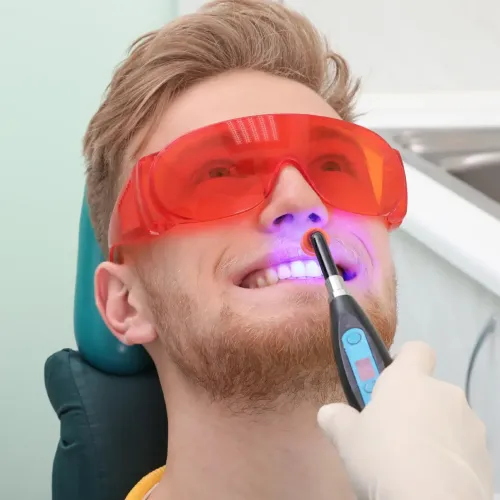
After bulk removal, any residual composite is polished away. Many providers also use UV or fluorescent light to identify the precise boundary between composite and enamel — composite fluoresces differently than natural tooth structure, giving the clinician a clear visual guide to avoid over-reducing the surface.
The result is a tooth that looks and feels exactly as it did before treatment began. Healthline's coverage of Invisalign costs and comparisons notes that orthodontics addresses more than cosmetics — crooked teeth are harder to clean and increase the risk of decay and gum disease — so the attachment process, including removal, is designed to protect the teeth you're investing in straightening.
Mild soreness is normal, particularly in the first week of a new tray. Healthline's guide on Invisalign pain reports that 83% of aligner users adapted within a week, and 54% described pain as mild overall. Discomfort during chewing is the most common complaint, and it typically resolves within two to three days of each tray change.
Adults tend to experience slightly longer adjustment periods than teenagers because fully formed jawbones remodel more slowly. But as WebMD explains, one in three orthodontic patients is an adult, and consistent wear still produces results — the timeline may simply be longer.
Treatment duration typically ranges from six months to two years depending on case complexity. After active treatment, a retainer preserves the result by giving the jawbone time to fully anchor teeth in their new positions. Skipping the retainer phase is the most common reason teeth drift back. If you're also considering aesthetic improvements alongside alignment, options like tooth veneers or professional teeth whitening can complement your orthodontic results once treatment is complete.
Complete Health Dentistry serves patients throughout Woodland Hills and the West San Fernando Valley with comprehensive orthodontic consultations. If you have questions about Invisalign attachments, wear schedules, or whether you're a candidate, our cosmetic dentist in Woodland Hills is ready to walk through your options with you. Contact us to schedule your consultation.
Medical disclaimer: This article is for informational purposes only and does not constitute medical or dental advice. Always consult a licensed dental professional for diagnosis and treatment recommendations specific to your situation.