Teeth whitening and composite bonding solve different problems — and combining them in the wrong order (or too quickly) can cause bonding failure. Understanding how these two treatments interact is essential before scheduling either procedure.
The Chemistry Reason You Can't Whiten and Bond in the Same Week
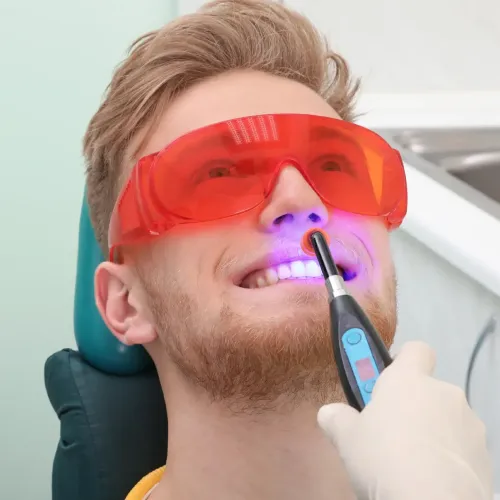
Most patients assume whitening first, then bonding, is a simple two-step process. The problem is biological. When peroxide bleaching agents penetrate enamel, they release free oxygen radicals that remain trapped inside the tooth structure long after your appointment ends.
Those residual oxygen molecules physically interfere with composite resin polymerization — the curing process that makes bonding stick. Research published in PMC confirms that bonding performed immediately or within one week of bleaching shows significantly reduced bond strength, with some studies documenting reductions of up to 50% or more compared to unbleached enamel.
The practical consequence: rushing bonding after whitening risks a restoration that chips, pops off, or simply fails to cure with full strength. This is not a rare complication — it is a predictable chemical outcome.
WebMD notes that bleaching will not whiten porcelain crowns or tooth-colored composite bonding, which underscores why sequencing matters so much. Once composite is placed, it holds its color permanently. Your natural enamel does not.
A waiting period of at least 7–14 days post-whitening is widely recommended before placing composite restorations. A Healthline overview of dental bonding confirms that bonding typically takes 30–60 minutes and doesn't require anesthesia — but the prep work before that appointment, including post-whitening wait time, determines whether the result lasts years or weeks.
The answer to "should I whiten before bonding?" is yes — but with a mandatory waiting period your dentist will schedule for you. If you're exploring your options with a cosmetic dentist in Woodland Hills, understanding this sequencing upfront will save you time and money.
When Whitening Alone Actually Makes the Problem Worse
There is a specific cosmetic concern where patients research both whitening and bonding, but neither is the right first choice: white spot lesions.
Post-orthodontic white spots (decalcification marks left after braces) and mild fluorosis appear as chalky patches on otherwise normal enamel. Standard teeth whitening brightens the surrounding enamel — which makes these white spots more visible and stark by contrast, not less. Composite bonding can mask them, but it requires etching healthy tooth structure that doesn't necessarily need preparation.
A minimally invasive alternative called resin infiltration addresses white spot lesions by penetrating the porous, decalcified enamel with a clear resin that matches the optical properties of healthy enamel. No drilling. No etching of sound tooth structure. The spot becomes visually integrated rather than covered.
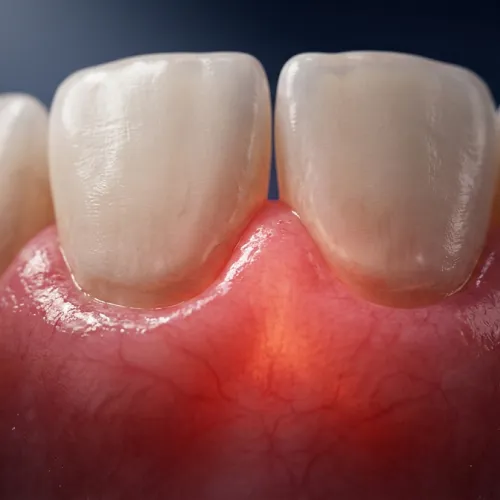
If your concern is white spots specifically, a consultation should clarify which approach fits — because whitening may worsen the appearance before bonding even becomes relevant. In some cases, underlying gingivitis or gum disease also needs to be addressed before any cosmetic work begins.
Which Treatment Actually Fixes Stains Better?
The answer depends entirely on what type of stain you have. The ADA's guidance on whitening distinguishes clearly between extrinsic stains (surface deposits from coffee, tea, tobacco) and intrinsic stains (discoloration embedded within the tooth structure itself).
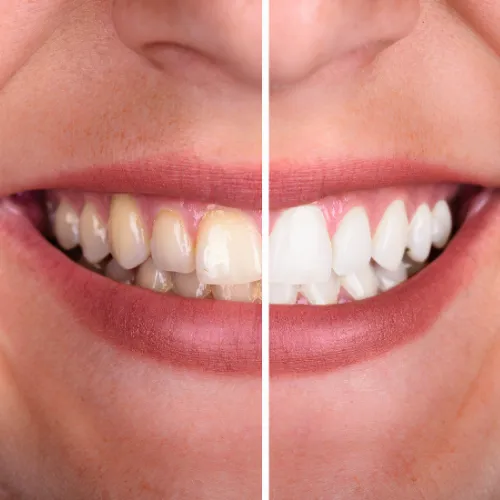
Professional teeth whitening works well on extrinsic staining and age-related yellowing. Hydrogen peroxide and carbamide peroxide penetrate enamel and oxidize chromogen compounds, breaking apart the color. For surface-level discoloration, professional whitening can brighten teeth several shades in a single visit.
Composite bonding, by contrast, physically covers the tooth surface. According to WebMD's dental bonding overview, bonding repairs chipped, cracked, or discolored teeth and can close gaps or reshape tooth contours — outcomes whitening simply cannot achieve.
For intrinsic stains — tetracycline discoloration, fluorosis, pulp-related darkening — whitening often has limited effect. Tooth veneers or bonding are typically more appropriate.
The practical framework:
- Surface yellowing or staining → whitening is appropriate
- Structural damage, chips, or gaps → bonding is the better tool
- Deep intrinsic discoloration → bonding or veneers, whitening may underperform
- White spot lesions → consider resin infiltration before either
The Long-Term Shade Commitment Nobody Mentions
Here is what most cosmetic dentistry content skips entirely: once composite bonding is placed to match your whitened shade, you are committed to maintaining that shade indefinitely.
Natural enamel gradually regresses toward yellow over 6–12 months due to diet, beverages, and aging. Composite resin does not. The result, if touch-up whitening is neglected, is a patchy smile where bonded teeth appear brighter than surrounding natural teeth.
Maintaining a matched smile means periodic touch-up whitening — typically every few months depending on lifestyle — to keep natural enamel aligned with the static composite color. This is not a flaw in the treatment; it is a maintenance cycle patients should understand before committing to it. Staying current with dental cleaning appointments also helps preserve both your natural enamel shade and the longevity of any bonding work.
Patients who smoke, drink coffee daily, or prefer to avoid ongoing whitening maintenance may find that bonding alone (without aggressive pre-whitening) creates a more stable long-term result. If significant tooth structure has been lost, dental crowns may be a more durable alternative worth discussing with your dentist.
Ready to Find the Right Treatment Sequence?
At Complete Health Dentistry, we help patients in Woodland Hills and the West San Fernando Valley understand exactly which cosmetic approach fits their smile — and in what order. Whether you're considering whitening, bonding, or aren't sure which applies to your situation, we'll assess your enamel, stain type, and long-term goals before recommending anything.
Contact our Woodland Hills office to schedule a cosmetic consultation.
This article is for informational purposes only and does not constitute dental or medical advice. Consult a licensed dental professional before beginning any cosmetic dental treatment.