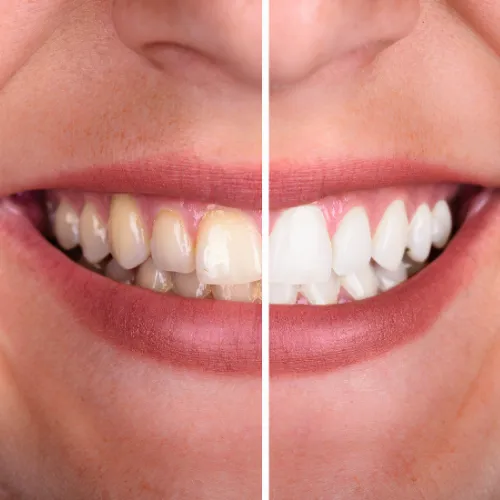
You can whiten your teeth during Invisalign treatment, but the timing and method matter enormously. Using gel incorrectly in a precision-fit aligner causes gum burns, not whiter teeth. And if you have composite attachments, whitening mid-treatment creates a color mismatch that requires a second round of bleaching after treatment ends.
Why Putting Gel Straight Into Your Aligner Tray Often Backfires
This is the most common mistake I see, and it comes down to a fundamental design difference that nobody talks about. For Woodland Hills-area patients, understanding the mechanics of aligners is key.
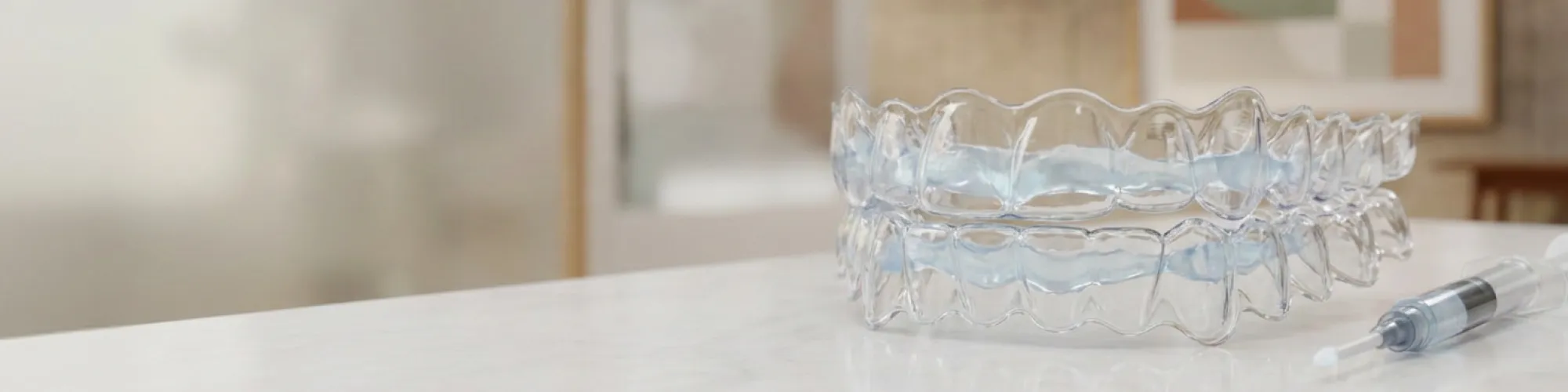
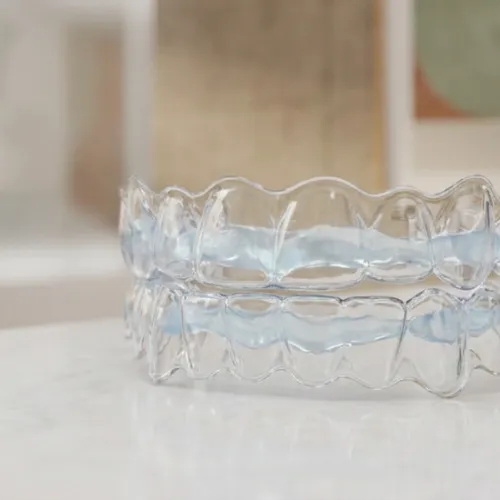
Professional whitening trays are fabricated with small gaps called "reservoirs." These intentional spaces hold the bleaching gel against your enamel long enough for the peroxide to penetrate. Your Invisalign trays are built on the opposite principle — they're vacuum-formed for a precision snap-fit with essentially zero clearance between the plastic and your tooth surface.
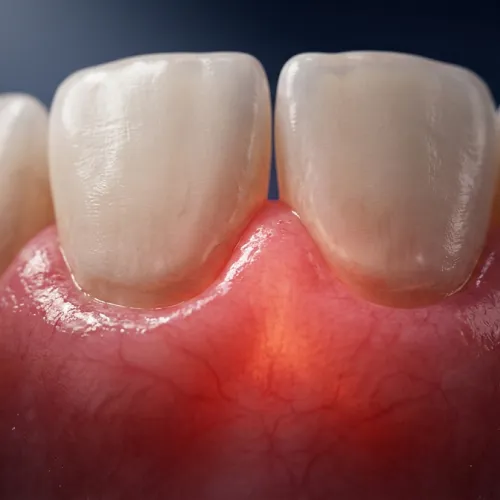
When you load carbamide peroxide gel into a tight-fitting aligner, the pressure of seating the tray forces most of that gel upward along your gumline. Instead of whitening your teeth, you get chemical irritation — blanching, burning, and gum sensitivity — while the gel never sits long enough against the enamel to do meaningful work.
Research published in PMC confirms that bleaching gel can work effectively within aligners, but the mechanics require attention to how the gel is distributed. The same study found that applying a small, precise amount to the center of each tooth's facial surface — rather than loading the tray generously — produces the best distribution and clinical results.
My recommendation: use a very conservative amount, no more than a small dot per tooth, placed on the inner surface of the tray before seating. This minimizes overflow onto soft tissue while still allowing contact time with enamel. If you're experiencing gum blanching or sharp burning, that's a signal the gel volume is too high, not that whitening is failing.
The "Polka Dot" Problem: What Attachments Do to Your Whitening Results
If you have composite attachments bonded to your teeth — and most Invisalign patients do — whitening mid-treatment creates a color problem that surprises a lot of people.
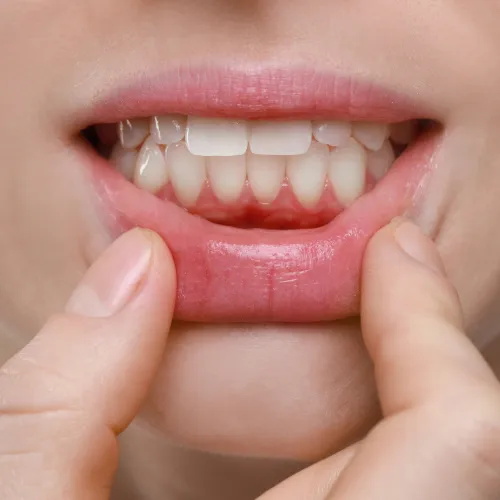
Here's the science. Dental composite, the resin material used to create attachments, is non-porous. Peroxide cannot penetrate it. So when you whiten, the enamel around the attachment responds and lightens, while the enamel beneath the attachment stays at its original shade. When attachments are removed at the end of treatment, those protected spots are revealed as darker islands surrounded by lighter enamel — a halo or polka-dot effect.
A PMC study on whitening agent effects on aligner attachments examined how whitening agents interact with composite attachment materials and found that the composite itself undergoes color change only superficially, not structurally — meaning the underlying protected enamel remains untreated.
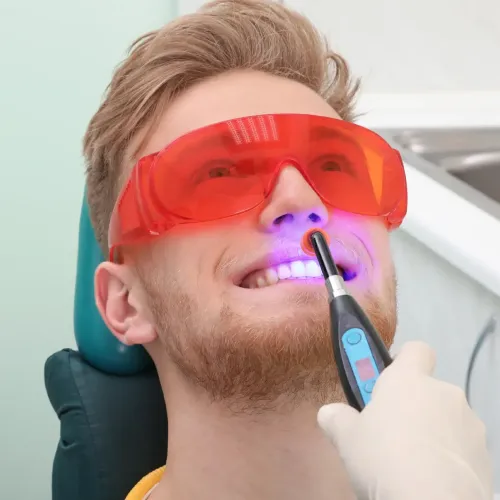
This doesn't mean you shouldn't whiten during treatment. It means you should plan for a brief second whitening session after attachments are removed to even out any shaded spots. I typically advise patients to do a short course of professional teeth whitening at the very end of treatment — once attachments are off and they've transitioned to their Vivera retainers — for the most uniform result.
Whitening strips are an even worse choice with attachments present. The strip adheres to the exposed surface but cannot conform around the raised composite bump, leaving an uneven application and worsening the halo effect.
The Sensitivity Calendar: When in Your Tray Cycle to Actually Whiten
Timing whitening within your aligner cycle is something I feel strongly about, and it's almost never discussed in the advice patients find online.
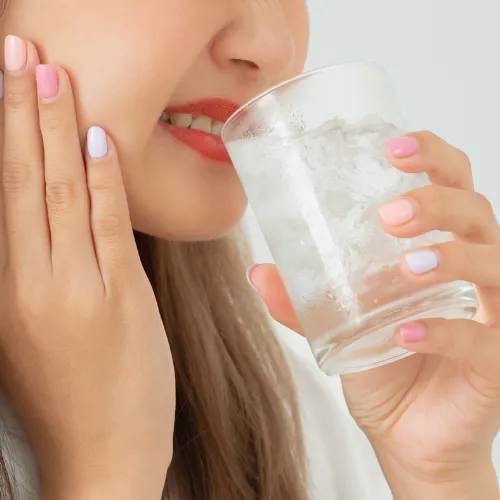
Invisalign causes what I'd describe as ligament soreness — a dull, pressure-type ache — during the first 48 to 72 hours after inserting a new tray. That's normal periodontal ligament stress from orthodontic tooth movement. Whitening agents, meanwhile, cause a completely different sensation: pulpal sensitivity, the sharp "zinger" that radiates from inside the tooth when peroxide reaches the nerve.
Stacking both of these simultaneously is genuinely uncomfortable and, more importantly, unnecessary. I advise patients to observe what I call the "passive phase" of their tray cycle — the final three to four days before they swap to the next aligner. By that point, the teeth have largely finished their movement for that stage, ligament soreness has resolved, and the tray still fits snugly enough to hold gel in position.
Cleveland Clinic notes that temporary sensitivity is the most common side effect of at-home bleaching, affecting a significant portion of patients. Concentrating that sensitivity into an already-sore window makes patients quit whitening prematurely. The passive phase approach protects compliance.
From a Complete Health Dentistry standpoint, I also want to flag something that goes beyond aesthetics. ADA Forsyth research has shown that wearing aligners reduces salivary flow across tooth surfaces, shifting the oral microbiome in ways that can elevate gingival inflammation markers. Adding a peroxide agent into that already-altered environment is another reason to be strategic about timing — not reckless about it. Patients who are already managing gingivitis or gum disease should be especially cautious about introducing bleaching agents during this phase.
Before or After Invisalign? The Honest Answer
Whitening before treatment gives you a clean baseline, but teeth will continue to stain from food and drink throughout a 12- to 18-month aligner course. Whatever shade you achieve pre-treatment won't hold perfectly.
Whitening after treatment — once attachments are removed and you're in retainers — is the most efficient approach for uniform, lasting results. Your retainers can double as whitening trays, as research published in PubMed has confirmed, with no significant difference in whitening effectiveness between trays with and without reservoirs when gel is applied correctly.
Whitening during treatment is viable if you follow the passive-phase timing and account for the attachment mismatch issue. It's not wrong — it just requires more planning.
The answer that fits most of my patients in Woodland Hills: do a conservative round during the last few tray sets, then a finishing round after attachments are off. That sequencing gives you the most predictable result with the least sensitivity. Keeping up with your dental cleaning appointments throughout treatment also helps maintain a healthier baseline for whitening to work from.
Ready to Straighten and Brighten? Talk to Us First.
If you're considering Invisalign — or you're already mid-treatment and wondering about whitening — the conversation is worth having before you buy anything off a shelf. At Complete Health Dentistry in Woodland Hills, we integrate your cosmetic goals into your orthodontic plan from the start, so you're not retrofitting whitening around a treatment that wasn't designed for it. Our cosmetic dentist in Woodland Hills can help you build a sequenced plan that covers both alignment and shade goals from day one. Reach out to schedule a consultation. We serve patients throughout the West San Fernando Valley, including Calabasas.
Medical disclaimer: This article is for informational purposes only and does not constitute dental or medical advice. Individual results vary. Consult a licensed dental professional before beginning any whitening or orthodontic treatment.